

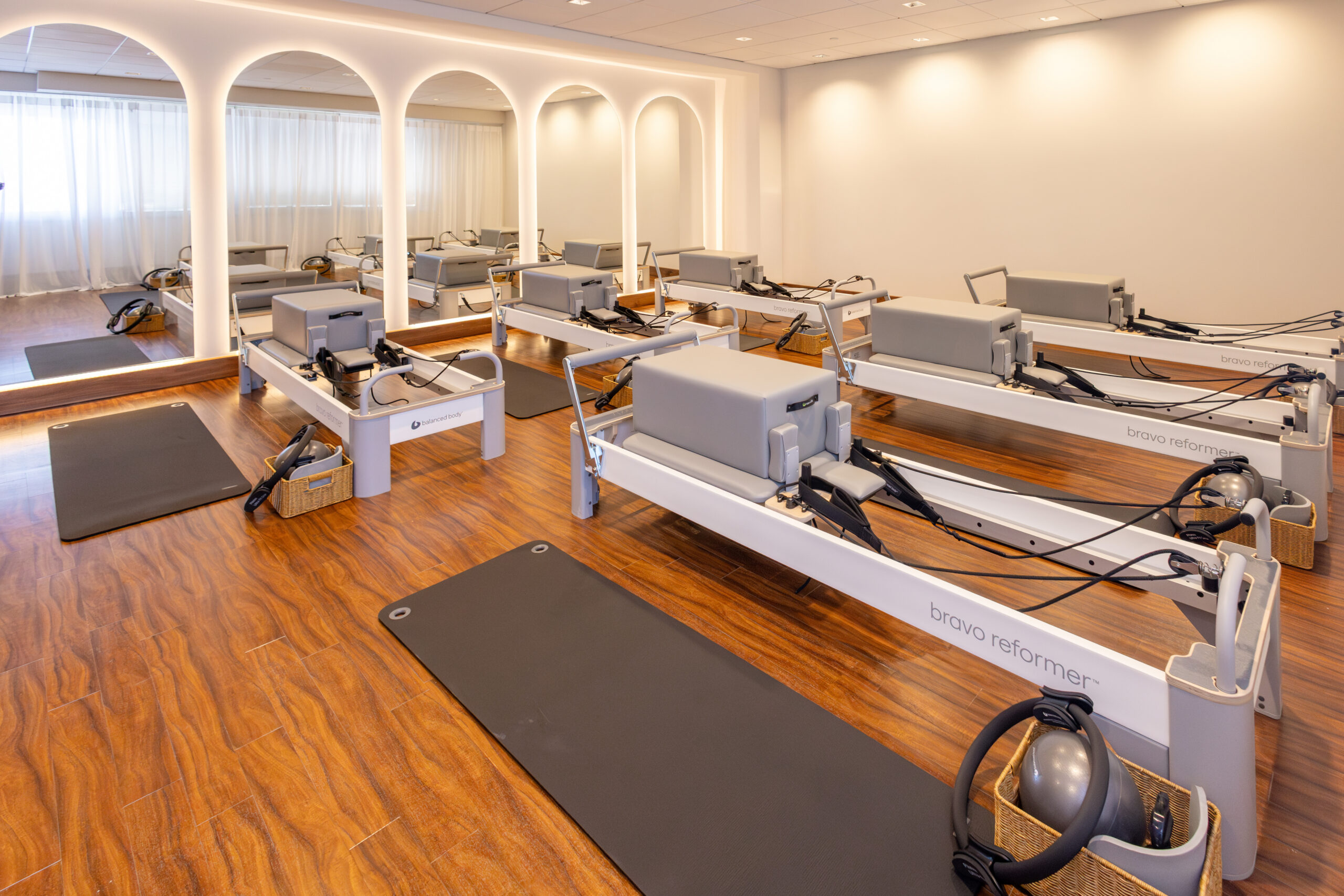
What to Know About Reformer Pilates
We spoke with Kathleen Connolly, a Reformer Pilates instructor At Chambers Center for Well-Being, about how her background in dance shapes her teaching approach and appreciation for movement. Kathleen shares how she discovered Pilates, what she loves about the classical method, and what beginners should know before stepping onto the reformer.
Discovering Pilates Through Movement
Kathleen began practicing Pilates during a period of transition in her life.
“I began taking Pilates classes after recovering from the birth of my twins. I found a local studio that allowed me to take them with me while they sat in their car seats while I took class!”
Her connection to Pilates stems from her background in dance and an appreciation for the method’s history and origins in New York City’s professional dance community.
“As a former dancer, I appreciate the method as it complements the training I had in New York City. Joseph and Clara Pilates [the inventors of the Pilates method] worked with professional dancers in NYC and his legacy dates back to over 100 years ago.”
Today, Kathleen draws on her background as both a dancer and a professor of dance to inform her approach to teaching reformer Pilates. Rooted in the classical method, her philosophy emphasizes Pilates as a complete system, in which each exercise and piece of equipment has a purpose and works together as part of a cohesive practice.
Understanding the Reformer Pilates Method
Reformer Pilates uses specialized equipment to guide a variety of controlled movements. While the reformer offers a different experience from mat-based Pilates, both are part of the same method.
“Working on the reformer is one way to experience the Pilates method. The method follows a specific sequence of exercises based on the principles of breath, control, centering, concentration, and precision. Joseph Pilates originally called his method ‘Contrology.’”
For Kathleen, certain exercises stand out for the level of breath control and focus they require.
“My favorite exercise is a 5 part series called the Ab series. I like this as a mat or reformer exercise because it is the most challenging for breath and control.”
She also values the unique experience of working with the reformer’s straps during the short box series, particularly when performing side-ups. These exercises are one example of what makes working with the reformer distinct.
Tips for Getting Started with Reformer Pilates
For anyone new to Reformer Pilates, Kathleen emphasizes the importance of patience. Learning the practice takes time, and becoming familiar with the equipment is only one part of the process.
“My advice in working with a new client would be to understand that it is a method and it takes time for the mind and body to adapt and integrate. The equipment is different from the mat work, but it all works together into one system.”
Her advice for beginners is straightforward: “Be patient with yourself and find the best teachers!”
With guidance from a knowledgeable instructor, beginners can take the time to become familiar with the movements, breathing, and control involved in Pilates. Approaching each class with patience allows you to focus on learning the method and developing your practice at your own pace.
Book Now! Kathleen can show you the ropes (and springs)!
At Chambers Center for Well-Being, our certified instructors guide small-group classes that focus on proper form and individualized attention, helping participants of all fitness levels build strength, improve mobility, and support overall well-being.
Whether you are new to reformer Pilates or looking to deepen your practice, working with an experienced instructor can help you build familiarity with the method and develop your technique over time.
Explore our group fitness classes and join Kathleen in our reformer Pilates studio!







Get Social